
What is Cushing's Disease and how does it happen?
Cushing’s Disease occurs when the body produces too much cortisol, also known as the stress hormone. Cortisol is released from the adrenal glands, which are endocrine glands that sit on top of the kidneys.
The release of cortisol is controlled by a hormone system in the body called the Hypothalamic-Pituitary-Adrenal Axis (HPA axis).
Cushing’s disease most commonly develops in two ways.
- Pituitary adenoma (causing excessive adrenocorticotropic hormone (ACTH))
- Excess production of corticotropin-releasing hormone (CRH)
Understanding HPA Axis… Our defense against stress!
The HPA axis is complex, but dysfunction can trigger Cushing’s disease. So what is vital information to understand?
The first is this pathway is for management of stress in the body. Stress triggers the cascade, resulting in increased cortisol in the body. Cortisol helps prepare the body for stress, it provides the body with a burst of energy which increases blood glucose availability (Figure 1). Increased cortisol is the goal, it helps the body handle stressors! The pathway has accomplished its job and the release of cortisol will halt the system (Figure 2)!
The second piece of information to know is that in Cushing’s, this pathway does not work properly. The system does not shut off, resulting in excess cortisol (Cushing disease).

Figure 1
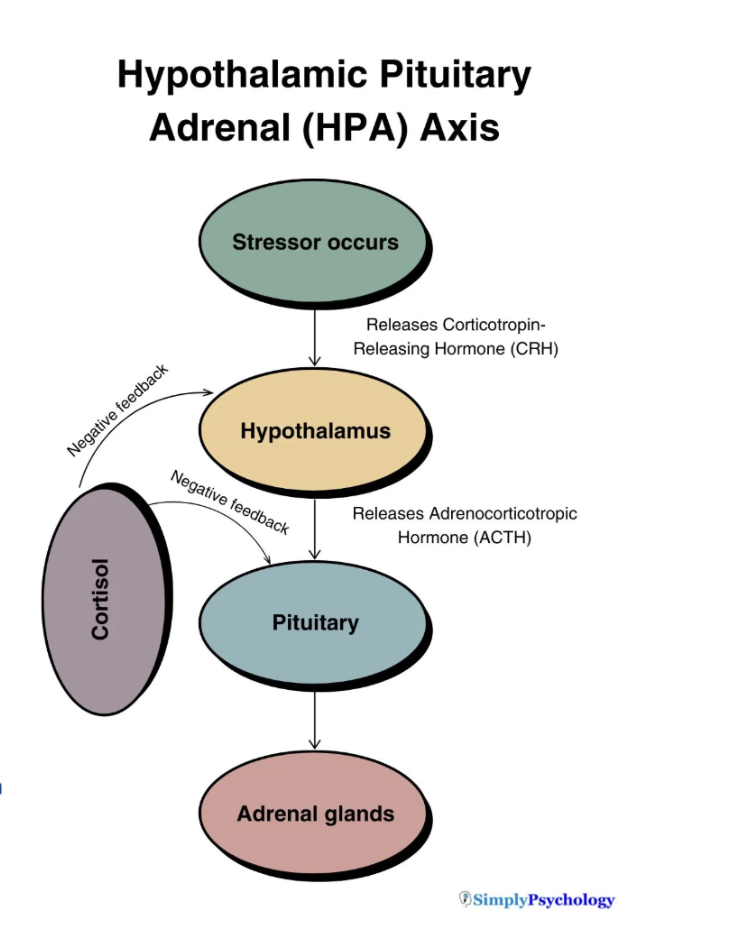
Figure 2

Knowledge Checkpoint!
1. If the hypothalamus is dramatically producing hormones without regulation, what hormone would it overproduce in relation to this HPA axis?
2. How would this overproduction of CRH cause excessive cortisol in the body?
Signs and Symptoms
There are some quintessential manifestations of Cushing’s disease (collectively called Cushing’s syndrome). The disease is rare and mostly seen in women. Early symptoms are:
- Increase facial hair
- Weight gain
- Amenorrhea (absent menstral cycles)
- Fat deposits on the face, neck, and abdomen
- Decreased muscle tone in the legs
- Thin skin
- Edema
If left untreated later manifestations can include:
- Hypertension
- Diabetes mellitus (excessive increase in blood glucose levels)
- Psychiatric changes
- Increased morbidity and mortality
This is why early treatment of Cushing’s disease is vital!
Risk Factors
These things can make people more susceptible to Cushing's Disease.
- Exogenous steroid use (common is glucocorticoids)
- Age of 25-50 years old
- Assigned female gender
- Pituitary gland tumors/ adenomas
Talk with your provider if you fit into any of these categories, and are worried about Cushing's Disease.
Knowledge Checkpoint!
1. Why would excessive cortisol in the body cause a long-term complication of diabetes mellitus?
Create Your Own Website With Webador